

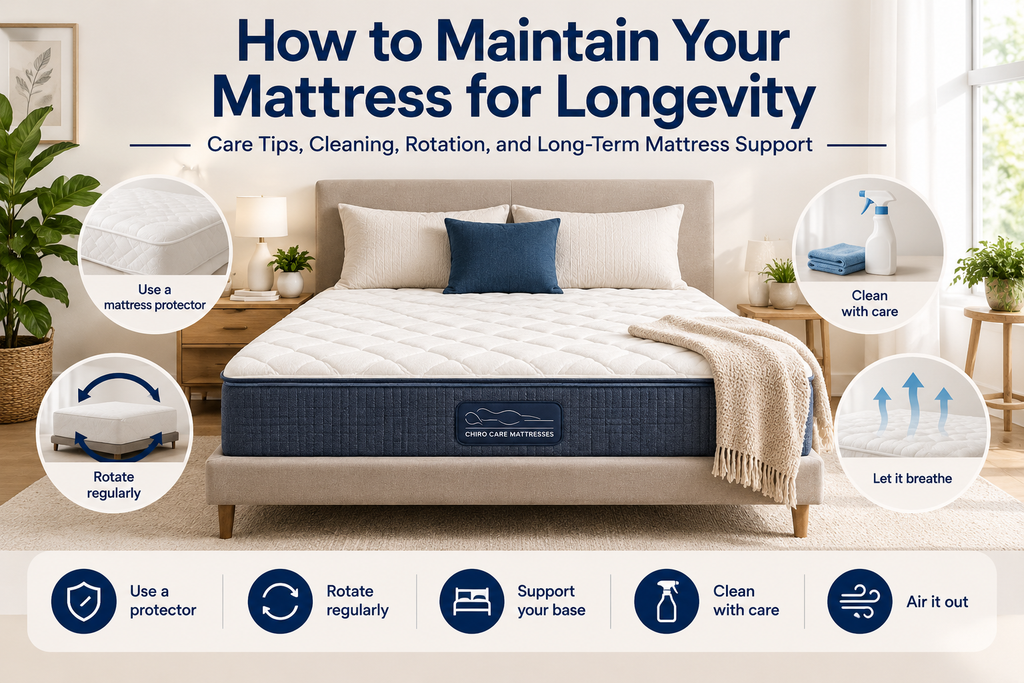
You've invested in a quality orthopaedic mattress, perhaps a Chiro Care model chosen specifically for its chiropractic-grade spinal support. Now the question is: how do you make sure it actually delivers that support for years to come, rather than softening into an expensive disappointment within a few seasons?
The good news is that mattress longevity is largely within your control. The steps are straightforward, and the payoff is significant: a well-maintained orthopaedic mattress can last considerably longer than a neglected one, and continue supporting your spine the way it was designed to.
This guide covers every element of that care routine, explains how long different mattress types last, addresses the specific needs of side sleepers, and gives you clear, diagnostic guidance on when it's actually time to replace your mattress.
What Is an Orthopaedic Mattress?
An orthopaedic mattress is defined as a mattress designed specifically to support the joints, back, and overall musculoskeletal system, particularly the spine, by maintaining proper alignment during sleep. Unlike standard mattresses, orthopaedic models are engineered with firmer support cores, higher-density foams, zoned pocket spring systems, or latex layers that resist premature compression under sustained body weight.
The term "orthopaedic" describes a design philosophy rather than a single material. A quality orthopaedic mattress may use individually wrapped pocket springs, high-density foam, natural or synthetic latex, or a hybrid of these materials.
Chiro Care Mattresses are purpose-built to deliver supportive sleep surfaces, using construction methods that prioritise spinal alignment and pressure point relief.
How Long Should an Orthopaedic Mattress Last?
A well-maintained orthopaedic mattress will typically last between 8–12 years. The specific lifespan depends on construction type, material quality, frequency of use and how well the mattress is maintained.
Average Lifespan by Mattress Type
| Mattress Type | Average Lifespan | Key Longevity Factor |
|---|---|---|
| Orthopaedic pocket spring | 8–12 years | Spring gauge and coil count |
| High-density memory foam | 7–10 years | Foam density |
| Latex orthopaedic | 10–15 years | Natural vs synthetic latex |
| Hybrid orthopaedic | 8–11 years | Quality of foam and spring layers |
| Standard foam | 5–7 years | Lower density degrades faster |
What Affects Mattress Lifespan?
- Body weight distribution: heavier sleepers can place greater sustained pressure on mattress components.
- Frequency of use: a guest bed used occasionally will generally outlast a primary bed used nightly.
- Maintenance habits: regular maintenance can help prevent unnecessary deterioration.
- Bed base quality: inadequate support can contribute to premature sagging.
- Environmental factors: moisture and poor ventilation may negatively affect mattress materials.
How to Properly Maintain Your Orthopaedic Mattress
1. Use a Quality Mattress Protector
A breathable, waterproof mattress protector can help protect the mattress against moisture, perspiration, spills, dust and everyday wear.
Choose a protector that is waterproof while remaining breathable. Regularly wash your protector according to the manufacturer's instructions.
2. Rotate Your Mattress Regularly
Rotating your mattress can help distribute wear more evenly across its surface and reduce concentrated body impressions.
Most modern orthopaedic mattresses are designed as single-sided mattresses. These should be rotated head-to-foot rather than flipped upside down.
3. Ensure the Right Bed Base
The bed base plays an important role in supporting the mattress. An inadequate or damaged base may allow uneven pressure to develop across the mattress.
- Slatted bases: ensure the gaps comply with the mattress manufacturer's recommendations.
- Avoid long-term floor placement: placing a mattress directly on the floor can reduce airflow underneath it.
- Platform bases: ensure the surface remains level and properly supported.
- Existing bases: inspect older bases for damage or sagging before placing a new mattress on them.
You can also review the Chiro Care mattress warranty information for applicable care requirements.
4. Clean Your Mattress Properly
Regular cleaning helps reduce the gradual accumulation of dust, skin cells and other debris.
- Remove all bedding and the mattress protector.
- Vacuum the surface gently using an upholstery attachment.
- Pay particular attention to seams and edges.
- Deal with spills as soon as possible.
For spills, blot rather than rub the area. Avoid soaking the mattress with water or cleaning solution.
Allow the mattress to dry completely before replacing your mattress protector and bedding.
5. Air Your Mattress Regularly
Giving your mattress time to breathe helps moisture accumulated during sleep evaporate naturally.
When changing your sheets, consider leaving the mattress uncovered for around 20–30 minutes before remaking the bed.
6. Avoid Habits That Accelerate Wear
- Avoid repeatedly jumping or standing on the mattress.
- Clean accidental spills quickly.
- Rotate the mattress regularly.
- Keep the mattress adequately supported.
- Use a suitable mattress protector.
Is an Orthopaedic Mattress Good for Side Sleepers?
An orthopaedic mattress can suit side sleepers when its firmness and support characteristics match the sleeper's body shape, weight and comfort preferences.
Side sleepers generally need adequate cushioning around the shoulders and hips while still maintaining support through the middle of the body.
General Firmness Guide for Side Sleepers
| Sleeper Weight | General Firmness Range | Consideration |
|---|---|---|
| Under 65kg | Medium | Lighter sleepers may prefer more cushioning around pressure points |
| 65–95kg | Medium-Firm | A balance of contouring and support |
| Over 95kg | Firm | Additional support may help reduce excessive sinkage |
When Should You Replace Your Mattress?
Mattress age is only one consideration. Changes in comfort, support and visible condition can also indicate that replacement may be worth considering.
Signs to Watch For
- Noticeable sagging or deep body impressions.
- Your mattress no longer feels supportive.
- Springs become noticeably noisy or uncomfortable.
- You regularly wake uncomfortable despite previously sleeping well on the mattress.
- You can noticeably feel internal components through the comfort layers.
- You consistently sleep better on other mattresses.
- The mattress has reached an advanced age and its comfort or support has noticeably declined.
Frequently Asked Questions
How often should I rotate my orthopaedic mattress?
Regular mattress rotation can help distribute wear across a larger area of the mattress. Always follow the care instructions provided for your specific mattress model, as recommended rotation frequency can vary between products.
Can I flip my Chiro Care mattress?
Many modern mattresses are single-sided and are designed to be rotated rather than flipped. Check the care instructions for your specific Chiro Care mattress before flipping it.
Does a mattress topper extend the life of a mattress?
A mattress topper may reduce some direct wear on the mattress surface and can alter the comfort feel. However, a topper cannot repair structural sagging, damaged springs or deteriorated support layers.
How should I clean a liquid spill from my mattress?
Blot the area as quickly as possible using a clean, dry cloth. Avoid rubbing or saturating the mattress. Use an appropriate mild cleaning solution if required and allow the mattress to dry completely before covering it again.
Is an orthopaedic mattress suitable for side sleepers?
It can be. Side sleepers generally need a balance between support and pressure relief around the hips and shoulders. The appropriate firmness depends on the individual's weight, sleeping position and comfort preference.
How long can a quality mattress last?
Mattress lifespan varies considerably depending on materials, construction, usage, body weight, bed base support and maintenance. Consistent care can help the mattress remain comfortable and supportive for longer.