


How to Care for Your Mattress: Practical Tips to Make It Last Longer
A good mattress is an investment. With the right care habits, most quality mattresses will last eight to ten years and maintain their support and comfort throughout. With poor care, even an excellent mattress can deteriorate years earlier than it should.
The good news is that mattress care is straightforward. These habits do not take much time, and the return is a better-performing, longer-lasting mattress.
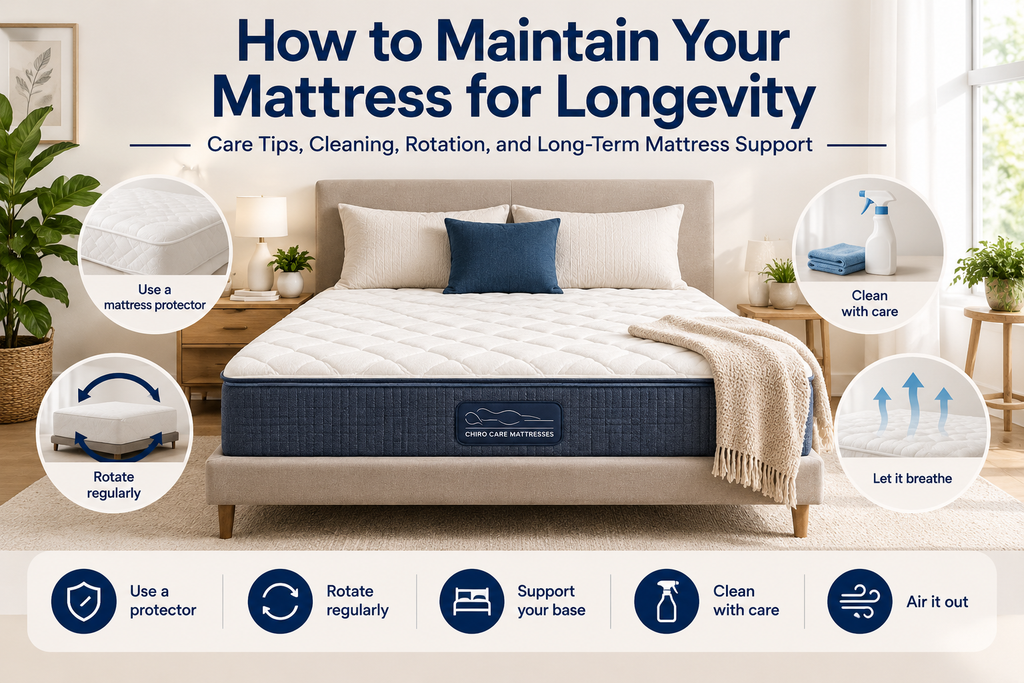
Use a Mattress Protector
This is the single most important thing you can do for your mattress. A quality mattress protector acts as a barrier between your body and the mattress, preventing sweat, oils, spills, dust mites, and dead skin cells from penetrating the mattress materials.
Over time, moisture and biological material degrade foam and fabric, affect the structural integrity of the mattress, and create an environment where dust mites and mould can develop. A protector prevents all of this.
Use a waterproof mattress protector that is washable. Wash it every two to four weeks along with your bedding. This keeps it hygienic and ensures it continues to do its job properly.
Rotate Your Mattress Regularly
Most mattresses benefit from being rotated head to foot every three to six months. Rotation distributes the wear across different areas of the sleeping surface rather than concentrating it in the spots where you sleep most.
This is particularly important in the first year of a new mattress, when the comfort layers are still settling and body impressions are most likely to form. Regular rotation in the early months helps the mattress develop wear more evenly.
Note that most modern mattresses are single-sided and should not be flipped. Rotating is head to foot, not top to bottom. If you are unsure, check the care instructions that came with your mattress.
Does Mattress Care Differ by Mattress Type?
Yes. While the basic principles of mattress care are similar, the best way to look after a mattress can vary depending on its construction.
Memory Foam Mattresses
Memory foam mattresses should generally be kept as dry as possible because excess moisture can take time to escape from dense foam layers. Use a suitable protector, avoid soaking the mattress during cleaning and allow any spot-cleaned areas to dry completely before replacing the bedding.
Pocket Spring and Innerspring Mattresses
Spring mattresses depend heavily on correct support from the bed base. A damaged frame, unsuitable slat spacing or uneven foundation can place additional stress on the spring system and contribute to uneven wear.
Avoid folding or sharply bending a spring mattress when moving it.
Hybrid Mattresses
Hybrid mattresses combine foam comfort layers with a spring support system, so both moisture control and correct base support are important. Follow the manufacturer's recommendations for cleaning, rotating and suitable foundations.
Single-Sided and Double-Sided Mattresses
Most modern mattresses are designed to be used on one sleeping surface and should be rotated rather than flipped. Only flip a mattress if the manufacturer specifically states that the model is double-sided.
Whatever type of mattress you own, the manufacturer's care and warranty instructions should always take priority over general mattress care advice.
Support It Properly
A mattress is only as good as the base underneath it. An unsuitable base can cause a mattress to sag, develop uneven wear, and break down faster than it should.
If you use a slatted base, check that the slats are no more than seven centimetres apart. Wider gaps allow the mattress to sag between slats, which accelerates wear and reduces support quality.
If you use an ensemble base or platform bed, make sure the surface is structurally sound and free from damage. A failing base will affect the mattress above it even if the mattress itself is in good condition.
Also ensure your bed frame is properly assembled and level. A frame that flexes or wobbles puts uneven stress on the mattress.
Keep It Clean
Even with a protector, it is worth giving your mattress a light clean periodically. Vacuum the surface every few months using the upholstery attachment on your vacuum cleaner. This removes dust and surface debris that accumulates even through a protector.
For spot cleaning, use a small amount of mild detergent diluted in cold water and a clean cloth. Blot the area rather than rubbing it, which pushes the stain deeper into the material. Allow the area to dry completely before replacing bedding.
Avoid using excess water on a mattress. Getting a mattress thoroughly wet can damage foam layers and create an environment for mould growth. If your mattress does get significantly wet, stand it upright and allow it to air dry completely, in direct sunlight if possible, before using it again.
Air It Out
When you change your sheets, resist the temptation to immediately remake the bed. Leave the mattress uncovered for at least thirty minutes to allow moisture from overnight sleep to evaporate. This is particularly useful in humid conditions.
Occasionally airing the mattress in a well-ventilated room or near an open window can also help keep it fresh. If possible, direct sunlight on a mattress for a few hours is effective at killing dust mites and reducing moisture.
Avoid Putting Excessive Stress on the Mattress
Mattresses are designed to support sleeping adults, not to handle concentrated impact. Allowing children to jump on the mattress stresses the internal components in ways that normal sleep use does not, and it can accelerate damage particularly to the spring system.
Sitting on the same edge of the mattress repeatedly also creates uneven wear. If you habitually sit in the same spot to get dressed or look at your phone in the morning, be aware that this can create a compressed area over time.
Moving a Mattress
If you need to move your mattress, carry it flat or standing upright on its side. Bending or folding a mattress can damage the internal components, particularly in spring mattresses where bending the spring system can cause deformation.
Mattress bags are available from moving suppliers and provide protection during transport. They are worth using if the mattress needs to go in a van or be stored temporarily.
When Care is No Longer Enough
Even with excellent care habits, every mattress has a finite lifespan. If yours is showing signs of sagging, body impressions, or is more than eight to ten years old, it is worth reassessing regardless of how well it has been maintained.
At Chiro Care Mattresses, we are happy to help you evaluate whether your current mattress still has useful life in it or whether it is time to find something better. Visit one of our Melbourne stores or get in touch with our team.
FAQs
How do I take care of my mattress and make it last longer?
Rotate your mattress every 3 months to promote even wear and prevent sagging. Use a quality mattress protector against spills and allergens. Ensure your bed base provides proper support with close slat spacing. Avoid jumping or placing excessive weight in single areas. Maintain proper ventilation by occasionally standing it upright, and deep clean annually with a vacuum or professional service.
Is a mattress protector necessary?
Yes, mattress protectors are essential investments protecting against spills, sweat, dust mites, and allergens that degrade materials and create hygiene issues. Quality protectors extend mattress lifespan significantly by preventing liquid damage, staining, and moisture accumulation. They're inexpensive compared to mattress replacement and preserve manufacturer warranties requiring protection.
How can I clean my mattress properly?
Vacuum both sides thoroughly monthly to remove dust and allergens. For stains, use mild soap solution or enzymatic cleaners appropriate for your mattress material. Avoid soaking or excessive moisture. Sprinkle baking soda, let sit overnight, then vacuum for odor elimination. For deep cleaning, hire professional services every 12-18 months to refresh the entire mattress safely.
How long does it take for a new mattress to soften?
New mattresses typically require 2-4 weeks to fully break in as materials adjust and compress slightly to your body. Initial firmness decreases as foam and coils adapt to regular use. During this adjustment period, avoid excessive rolling or jumping. Give mattresses at least 30 days before deciding whether firmness suits you—premature judgments often lead to unnecessary returns.
How often should I rotate my mattress?
Rotate your mattress every 3 months (head to foot) to promote even wear distribution and prevent sagging in high-use areas. Some recommend rotation every 1-2 weeks initially, then quarterly long-term. Consistent rotation significantly extends mattress lifespan and maintains consistent comfort and support across the entire surface throughout years of use.
Why is mattress rotation important?
Rotation prevents uneven sagging and permanent body impressions caused by concentrated pressure on specific areas. It distributes wear evenly, maintaining consistent support throughout the mattress and preventing the common problem of middle sagging between sleepers. Regular rotation can extend mattress lifespan by years and preserve sleep quality and spinal support long-term.
21
Sep
RECENT POSTS