

How to Choose a Mattress in Australia: A Complete Buyer's Guide
Buying a mattress is one of the more important purchases you will make for your home. You will spend roughly a third of your life on it, and the quality of your sleep has a direct effect on everything from your mood and energy levels to your long-term spinal health. Yet most people spend more time researching a new television than they do a new mattress.
This guide covers everything you need to know before you buy, from understanding mattress sizes and materials through to matching a mattress to your sleep position and budget.
Start With the Right Size
The first decision is size. Australian mattress sizes are standardised, so it pays to know them before you start shopping.
A single (91 x 188 cm) suits children and compact bedrooms. A king single (107 x 203 cm) is the popular step up for teenagers and adults in smaller rooms who want more space. A double (138 x 188 cm) works well for solo sleepers or couples in tighter bedrooms. A queen (153 x 203 cm) is Australia's most popular size and the standard choice for couples. A king (183 x 203 cm) gives couples maximum personal sleeping space and suits larger master bedrooms.
As a rule, bigger is better if your room and budget allow. Couples who feel cramped on a double rarely regret moving to a queen, and couples who upgrade to a king tend to sleep better for it.
Understanding Mattress Types
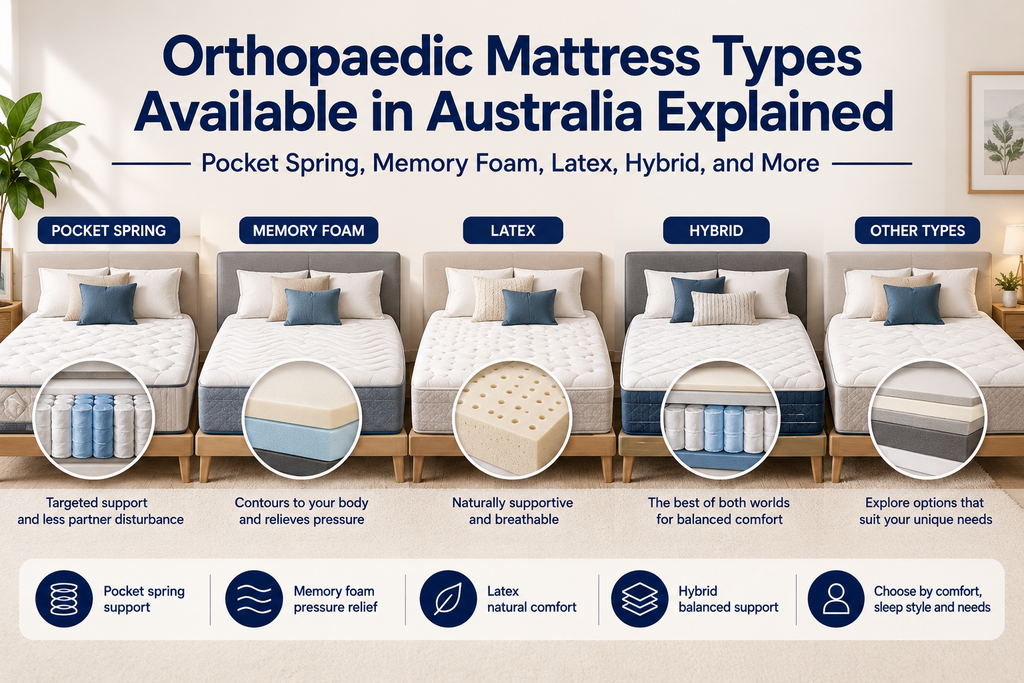
Once you know your size, the next decision is the type of mattress. There are four main options sold in Australia.
Pocket spring mattresses use individually wrapped coils that respond independently to pressure. They offer good motion isolation, breathability, and a responsive feel. They suit most sleep positions and are especially popular with couples.
Memory foam mattresses contour closely to your body, distributing weight evenly and relieving pressure across the hips, shoulders, and lower back. They are quieter than spring mattresses but can sleep warm if not made with open-cell or gel-infused foam.
Gel foam mattresses combine the body-hugging properties of memory foam with cooling gel technology. They are a good choice for people who sleep hot or live in warmer climates.
Pillow top mattresses add an extra sewn-in comfort layer to the top of a spring or foam base. They offer a plush, cushioned feel without sacrificing the support underneath.
Hybrid mattresses combine a pocket spring base with one or more foam comfort layers. They are increasingly popular because they deliver the responsiveness of springs alongside the pressure relief of foam.
Firmness: Getting it Right
Firmness is the characteristic people most commonly get wrong. It is tempting to assume a firmer mattress is always better for your back, but the research does not support this. What matters is that your mattress keeps your spine in natural alignment while also cushioning your pressure points.
Side sleepers generally do best on a medium feel. Their hips and shoulders need enough give to sink in slightly so the spine stays straight.
Back sleepers typically suit a medium-firm mattress. The lower back needs enough support to prevent it from sagging while the mattress still accommodates the natural curve of the spine.
Stomach sleepers usually need a firm mattress to stop their hips sinking in, which can hyperextend the lower back.
Body weight also plays a role. Lighter sleepers often find that a softer mattress suits them, because they do not compress the layers as much. Heavier sleepers generally need a firmer, denser mattress to get the same level of support.
What to Look for in Terms of Support
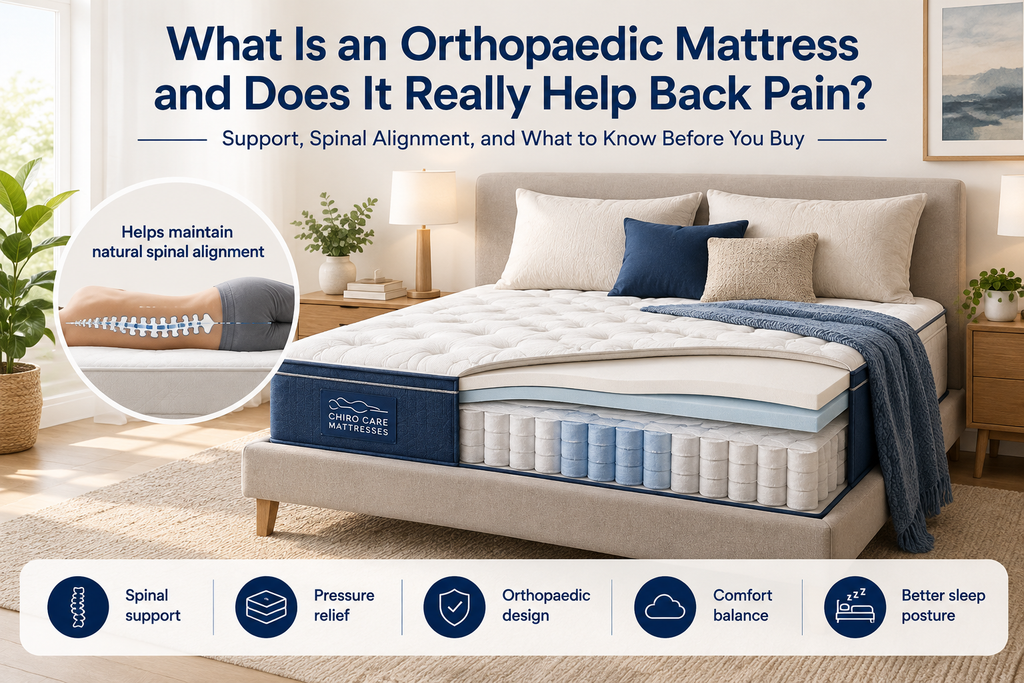
Support and comfort are related but different things. Comfort is how the mattress feels to the touch. Support is about whether the mattress keeps your spine aligned throughout the night.
A good supportive mattress will have a robust base layer, whether that is a dense foam core or a well-constructed spring system. The comfort layers on top should be thick enough to cushion pressure points but not so soft that they allow the hips to sink out of alignment.
If you wake up with lower back stiffness or shoulder pain, this is often a sign that your mattress is not providing adequate support in those areas. It could mean the mattress is too soft, too firm, or simply worn out.
Think About Who is Sleeping on It
A mattress that suits one person may not suit another. If you are buying for yourself, focus on your own sleep position, weight, and temperature preferences. If you are buying for a couple, you need to find a balance.
Motion isolation matters a lot for couples. If one partner is a light sleeper or wakes frequently during the night, a mattress with good motion isolation, such as a pocket spring or memory foam model, will reduce the disruption caused by movement.
Edge support is also worth considering for couples. A mattress with reinforced edges means both sleepers can use the full width of the bed rather than feeling like they might roll off if they sleep near the side.
Budget and Value
Mattresses in Australia range from under $300 for basic options to well over $5,000 for premium models. Price generally reflects the quality and quantity of materials used, as well as the construction complexity.
A higher price does not automatically mean a better mattress for you personally. The right mattress is the one that suits your sleep position, body type, and preferences, bought from a retailer whose products are well made and backed by a proper warranty.
Look for mattresses that come with at least a five-year warranty, and ideally ten. A trial period or return policy is also worth checking before you commit, particularly if you are buying online.
When to Replace Your Current Mattress
Most quality mattresses last between eight and ten years. Signs that it is time for a replacement include visible sagging or body impressions, waking up with stiffness or pain that was not there when you went to bed, noticeably better sleep when you stay somewhere else, and a mattress that is simply more than ten years old.
Replacing a mattress on time is an investment in your sleep quality and long-term health. A good rule of thumb is to reassess your mattress every seven years rather than waiting until it has clearly deteriorated.
Where to Buy a Mattress in Melbourne
Buying in-store gives you the chance to physically try the mattress, which is valuable. Spending at least ten minutes lying in your normal sleep position gives you a realistic feel for how it will perform.
At Chiro Care Mattresses, our team across Melbourne locations can walk you through our full range and help you find the right fit based on your sleep style, bedroom size, and budget. We also offer online purchasing with delivery across Australia for those who prefer to shop from home.
FAQs
How do I choose the right mattress in Australia?
Consider your body weight, sleeping position, existing health concerns, and budget when selecting. Test mattresses in-store by lying in your normal sleep position for at least 10-15 minutes. Check for Australian-made options with warranty support, research construction quality, and ensure proper spinal alignment without pressure points.
What mattress firmness should I choose?
Choose based on body weight: lighter sleepers (under 80kg) benefit from medium-soft, while average adults (80-100kg) suit medium firmness. Heavier individuals (over 100kg) need firm support to prevent excessive sinking. Your sleeping position matters—side sleepers need less firmness than stomach sleepers for proper spinal alignment.
Which mattress type is best?
Pocket spring mattresses offer superior support and durability, memory foam provides pressure relief and contouring, and latex combines both benefits with natural materials. Hybrid options combine coil support with foam comfort. Your choice depends on priorities—choose springs for support, foam for pain relief, or hybrids for balanced benefits.
What is the best mattress for side sleepers?
Side sleepers need medium-firm hybrid or pocket spring mattresses with excellent contouring around shoulders and hips. Memory foam hybrids excel for this position as they provide pressure relief on joints while maintaining spinal support. Ensure adequate thickness and quality comfort layers to prevent pressure point pain throughout the night.
What is the best mattress for back sleepers?
Back sleepers benefit from medium-firm mattresses that support the natural lumbar curve without sagging or excessive firmness. Pocket spring and hybrid mattresses work well for this position, offering responsive support that keeps the spine aligned. Ensure adequate neck support with proper pillow height to prevent morning stiffness.
What is the best mattress for couples?
Couples need medium-firm mattresses with motion isolation properties—pocket spring and hybrid options excel here. Individual coil systems prevent one partner's movement from disturbing sleep. Consider different firmness preferences by selecting hybrids with varied layers or testing together to find compromise comfort that satisfies both sleepers.
What is the most popular mattress size in Australia?
Double beds remain the most popular choice for Australian bedrooms due to space efficiency and affordability. However, many couples now prefer Queen sizes for additional comfort and space. King mattresses are increasingly popular among those prioritizing sleep quality and space, while Single beds suit children and smaller rooms.
How much should I spend on a mattress in Australia?
Quality mattresses cost $800-$2,500+ depending on construction and materials. Mid-range options ($1,200-$1,800) offer excellent value with reliable support and durability. Investing more ensures better materials, longer lifespan, and superior support, potentially reducing health issues. Avoid extremely cheap mattresses that compress quickly and provide inadequate support.
When should I replace my mattress?
Replace your mattress when it shows visible sagging deeper than 1.5 inches, produces unusual noises, causes persistent morning pain, or has permanent body impressions. If you've owned it over 7-10 years and notice declining comfort and support, replacement improves sleep quality and prevents developing long-term spinal issues.
21
Sep
RECENT POSTS