
What Is Edge Support in a Mattress and Why Does It Matter?
Edge support is one of the features that mattress descriptions mention without always explaining clearly. Most people only discover how much it matters after sleeping on a mattress that does not have it. This guide explains what edge support is, how it is built into a mattress, and which sleepers will feel the difference most.
What Edge Support Means
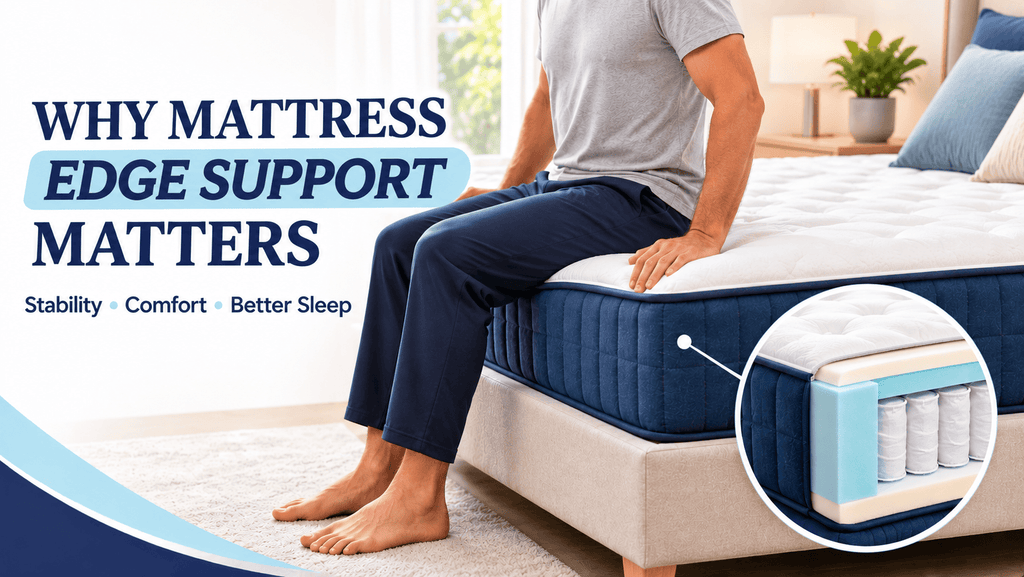
Edge support refers to the firmness and stability of the perimeter of a mattress. A mattress with strong edge support holds its shape when weight is placed near the side. A mattress without it compresses and slopes inward when you sit or sleep close to the border.
The most obvious version of poor edge support is when you sit on the side of the bed to put on shoes and the mattress folds sharply under you. A less obvious version is sleeping near the edge of a shared mattress and sensing the surface dropping away rather than staying level. Both are signs that the perimeter of the mattress lacks structural reinforcement.
How Edge Support Is Built Into a Mattress
Mattress manufacturers use two main methods to reinforce the perimeter.
Reinforced Perimeter Coils
In pocket spring and orthopaedic mattresses, the coils around the outer edge are wound with heavier-gauge wire or at higher tension than the coils in the sleeping area. This gives the edge more resistance without making the central sleeping surface firmer. The reinforcement is structural and does not change how the mattress feels in the area where you actually sleep.
High-Density Foam Encasement
A band of firmer foam runs around the outer edge of the mattress beneath the comfort layers. This foam border holds the mattress shape under lateral pressure and stops the edge from collapsing when weight is placed on it. The foam border also helps the mattress maintain its rectangular profile over time rather than developing a rounded edge shape from use.
Some mattresses use a combination of both reinforced coils and foam encasement. Models in our Crown, Prestige, and Palace ranges use perimeter reinforcement as part of their orthopaedic construction.
Why Edge Support Matters in Practice
Getting In and Out of Bed
When you sit on the side of the mattress to stand up, a firm perimeter gives you a stable platform to push from. A soft or unsupported edge causes you to sink into the surface as you try to stand, which requires more physical effort and places more strain on the knees and hips. For people with joint pain or limited mobility, this is a daily practical concern.
Usable Sleeping Surface
If the perimeter of the mattress compresses significantly, sleeping near the edge feels unstable. On a shared queen or king mattress, both sleepers tend to stay away from the sides of the bed to avoid the sensation of rolling toward the edge. This effectively reduces the usable width of the mattress for both people. Strong edge support means the full surface is stable from one side to the other.
Sitting on the Bed
Many people sit on the side of the bed while dressing, putting on shoes, or placing items on a bedside table. A mattress with poor edge support shows faster wear and distortion at the points where this happens regularly, because the perimeter is being repeatedly loaded without adequate structural resistance. Over time, a sagging edge compresses further and the problem worsens.
Long-Term Shape Retention
A mattress that holds its edge shape over years maintains a more consistent sleeping surface across the full width. Sagging at the perimeter often precedes broader sagging across the sleeping area as the structure of the mattress weakens progressively from the sides inward. Edge reinforcement helps maintain the mattress's original profile for longer.
Who Needs Edge Support Most
Edge support is most relevant for the following situations:
- Couples who share a mattress and each sleep closer to their respective sides
- Older adults who rely on the firmness of the bed edge when sitting up or transferring from lying to standing
- People managing back, hip, or knee pain who need a stable surface when getting in and out of bed
- Anyone who regularly sits on the edge of the bed as part of their daily routine
- Those purchasing a queen or king size mattress where the full width is needed
For a single sleeper who consistently sleeps in the centre of a large mattress and rarely sits on the edge, edge support is a lower priority. For most other situations, it is worth considering specifically when comparing models.
How to Test Edge Support Before You Buy
If you are assessing a mattress in a showroom, edge support is straightforward to evaluate in person.
- Sit on the side of the mattress and note how much it compresses and whether it slopes inward
- Lie near the edge and assess whether the surface stays level or drops away toward the side
- Press your hand down on the perimeter and compare the resistance to pressing in the centre of the mattress
Both our Thomastown and Ravenhall showrooms allow you to test any mattress in person before purchasing. Our team can also identify which specific models in our range have the strongest perimeter reinforcement if that is a priority for your situation.
Edge Support in Our Mattress Range
Orthopaedic and pocket spring mattresses in our range are built with perimeter support as part of their structural design. The Crown Orthopaedic Mattress, Prestige Orthopaedic Mattress, and Palace Pocket Spring Mattress include reinforced edge construction. These models are worth considering for anyone who specifically needs edge stability alongside orthopaedic spinal support.
If edge support is a specific requirement for your situation, mention it when you visit or call us and our team will direct you to the models where this is most pronounced.
FAQs
Can you improve edge support on an existing mattress?
No. Edge support is built into the mattress structure during manufacturing. If an existing mattress has a sagging perimeter, it may indicate that the structural components in that area have worn down. A mattress topper sits on the sleeping surface and cannot fix structural issues around the edges. If your mattress has significant edge sagging, replacement is generally a more practical solution than attempting a workaround.
Does edge support change how the sleeping surface feels?
It should not significantly change the feel of the central sleeping area. Perimeter reinforcement adds stability around the mattress edges while maintaining the comfort and support of the main sleeping surface. A well-designed mattress with edge support provides a consistent sleeping experience in the middle while offering additional stability when sitting or sleeping near the sides.
Is edge support more important on a king or queen mattress?
Yes, edge support can be particularly important on king and queen mattresses shared by two people. Strong perimeter support helps make more of the mattress surface usable and reduces the feeling of instability when either sleeper rests near the edge. On a single mattress used by someone who sleeps mainly in the centre, edge support may be less critical, although it still provides useful stability when getting in and out of bed.
How long does edge support last in a quality mattress?
In a well-constructed orthopaedic or pocket spring mattress, perimeter reinforcement is designed to maintain its structural integrity throughout the mattress's lifespan. A quality mattress typically lasts around eight to twelve years with normal use and proper care, although actual durability depends on its construction, materials, usage, and maintenance. Excessive sagging or reduced stability around the edges may indicate that the mattress is wearing out or lacks adequate perimeter support.
04
Nov
03
Nov
RECENT POSTS

04.November.2026
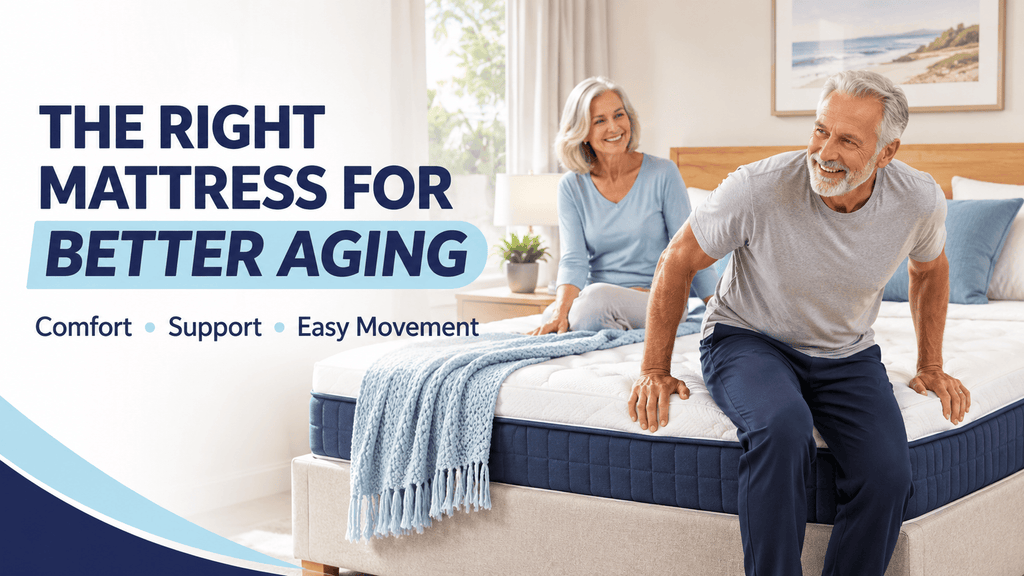
Choosing a Mattress for Older Adults: Comfort, Support, Edge Stability and Ease of Movement
0 Comments
03.November.2026
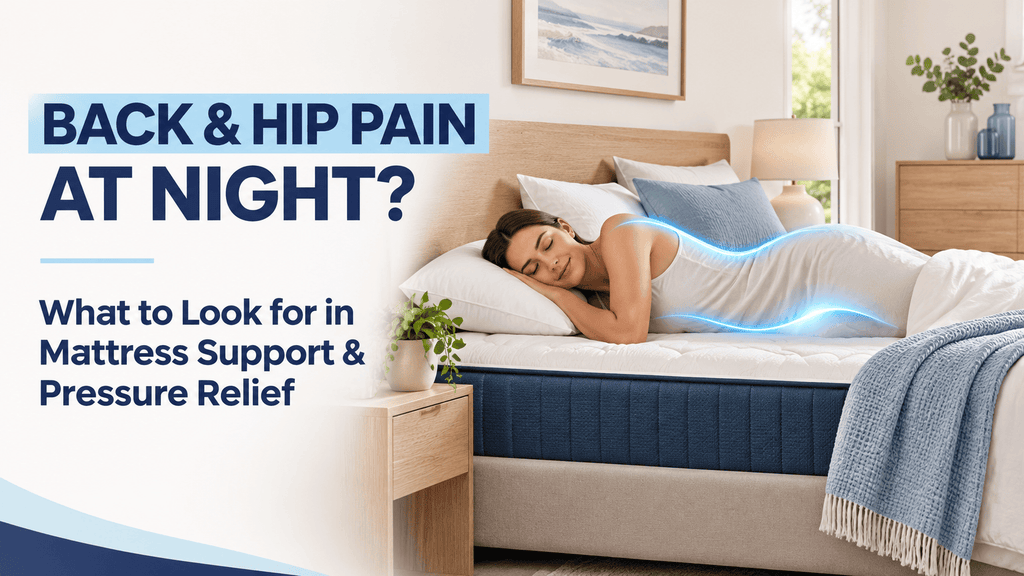
Back and Hip Pain at Night: What to Look for in Mattress Support and Pressure Relief
0 Comments